

This page contains helpful information on dealing with health and medical issues while abroad. However, the first step to ensuring you stay healthy abroad is to make sure you are healthy before you go.
 All NanoJapan students are required to schedule a Pre-Departure Medical Check with their medical doctor and should also visit their dentist, eye doctor, and/or any mental health-care professional or counselors you routinely see at least one month prior to departure. Be sure to obtain updated written prescriptions for all medications, glasses, or contacts. Review the CDC Travel Website for Japan with your doctor or healthcare professional and be sure to discuss how participation in this program might impact your personal health situation.
While no immunizations are required for entry into Japan you should ensure that all basic immunizations are up to date. Some immunizations must be given 4 - 8 weeks prior to departure for them to be effective so schedule these appointments as soon as possible. For more information see the CDC Vaccination for Travel website.
 The style of medical care abroad is largely dependent on the country. While medical care in Japan is good, English-speaking physicians and medical facilities that cater to Americans' expectations are expensive and not widespread. The US Embassy in Japan maintains a list of Medical Resources in Japan that includes English-speaking clinics and doctors.
Please make the NanoJapan program aware of any medical issues, disabilities, or special needs that you may have so that we can provide you with advice and recommendations on resources and the facilities/accommodations that you can anticipate in Japan. If you suffer from a chronic or serious physical or behavioral health condition (including eating disorders), you should consult with a health care professional before making the decision to participate in this program. We cannot guarantee access to the same kind of medical care, medications, facilities, accommodations and services that you receive in the U.S., though we strive to make the NanoJapan program accessible to all individuals.
 RX Medication: Japan strictly regulates medication that can be legally brought into the country. Generally, only up to one month's supply of allowable prescription medicine can be brought into Japan. Travelers must bring a copy of their doctor's prescription as well as a letter stating the purpose of the drug. Travelers who must carry more than one month's supply (except prohibited drugs and controlled drugs), or are carrying syringes (pumps), are required to obtain a "Yakkan Shoumei", or an import certificate in advance, and show the "Yakkan Shoumei" certificate with your prescription medicines at Customs.
More information on this process and necessary application forms can be found at the websites below. If you need to obtain a Yakkan Shoumei certification you should begin this process as soon as possible to ensure you receive your certificate prior to departure. Contact your nearest Japanese consulate in the U.S. for questions about this process.
OTC Medication/Vitamins: Up to a two-month supply of allowable over-the-counter medication and up to a four-month supply of allowable vitamins can be brought into Japan duty-free. Some over-the-counter medicines commonly used in the United States, including inhalers and some allergy and sinus medications, are illegal to bring into Japan.
The following medications are illegal to bring into or posess in Japan for any reason:
The following require a Yakkan Shoumei issued by the Japanese Ministry of Health to bring into Japan in any amount:
Carefully review the information on the websites below and the ingredient list of any over the counter medication you are bringing with you to Japan to make sure it does not contain any prohibited stimulants.
All NanoJapan students are provided with overseas health, accident, illness, repatriation, and evacuation of remains coverage through the University of Tulsa's CISI insurance policy for the duration of their stay abroad. All NanoJapan participants will receive a CISI insurance card to carry with them in their wallet while in Japan and a detailed booklet outlining the coverage amounts provided. You can call the number on the back of this card at least 24 hours prior to your appointment to see if CISI can arrange for pre-payment of your medical care. However, if you are experiencing a medical emergency or CISI cannot arrange for pre-payment you will need to pay all medical costs up-front individually and then you will need to file a claim for reimbursement directly with CISI.
If you need to seek medical care during the Orientation program, please notify the NanoJapan program as soon as possible so that we can provide you with any necessary support or assistance. During the Orientation Program in Tokyo, NanoJapan students will be taken to the nearby SOS International Clinic for non-emergency medical needs. The SOS International Clinic in Tokyo is located very close to the Sanuki Club hotel and caters specifically to the health care needs of foreigners. The address is 11th Floor, Sumitomo Fudosan Shin-Akasaka Bldg., 4-2-6 Akasaka, Minato-ku, Tokyo 107-0052 and the telephone numbers are 03-3560-8161 or 03-3560-7170 (Alarm Center/English available).
Immediately upon arrival at your research internship site, all NanoJapan students should speak with their research advisor or lab secretary about available medical facilities for foreigners and what to do if you should become ill or need medical care at your host lab. The US Embassy in Japan maintains a list of English-speaking doctors and clinics in cities throughout Japan. This is a useful site to review with your lab to determine which doctors or clinics are closest to the university and your housing. The university may also have on-campus medical facilities available that you can utilize as well. If your lab knows that you are going to see a doctor they will likely offer to send someone with you to help translate as necessary. Be sure that your research lab advisor and lab secretary know which clinic you prefer to use in case of medical emergency. Please also notify the NanoJapan program as soon as possible if you have sought medical care so that we can provide you with additional support and assistance as needed.
 If you have specific allergies that are debilitating or life threatening, or if you have a medical condition that is not immediately apparent or easily identifiable (such as diabetes, severe food allergy, allergies to drugs, or epilepsy), you should wear a medic alert bracelet and notify the NanoJapan program of your condition prior to departure.
You can also obtain Japanese-language cards on a number of allergies and medical conditions that you can carry with you in your wallet from a company like Select Wisely or you may be able to find these for free online or through applicable organizations that provide support for your condition/allergy. These cards can be customized for a variety of medical conditions or dietary restrictions, allergies or preferences. Even if you have intermediate or advanced Japanese language skills, it can be very difficult to explain your specific condition or needs in a medical emergency or in a loud restaurant. Being able to simply show the Select Wisely card ensures that the person you are communicating with clearly understands your condition, needs, or preferances.
You should also want to notify your roommate, housing manager, and research lab advisor and mentor of severe allergies or medical conditions so that they know what to do in case of an emergency.
 If you wear glases or contacts, be sure visit your eye doctor before you go and bring a written copy of your glasses and contact prescription with you to Japan. If you wear contacts, bring a sufficient supply for the summer. It is also helpful to bring an extra pair of glasses as a lost or broken pair can be difficult (and often expensive) to replace abroad. Contact solution is readily available in Japan, so just bring a one-week supply with you and plan to purchase more there. If you prefer a certain brand you may want to bring enough for all summer.
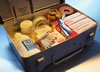 When traveling abroad it is always a good idea to bring a small, medical first aid kit and common medications with you. Having these supplies on hand will make it easy to treat minor illnesses and injuries. Keep in mind that most medication and medical supplies in Japan will only be in available in their Japanese versions and there will likely be no English translation on the boxes. If you have allergies or drug contraindications, it is especially important that you bring your own over-the-counter medication as the labels and ingredient lists of their counterparts in Japan will only be written in Japanese. For major medical issues or illness consult your nearest English-speaking Clinic.
Some common over-the-counter medications available in the U.S. are prohibited in Japan, including those containing Pseudoephedrine. Be sure to check the ingredient list of any medication you plan to bring with you. Leave all over-the-counter medication in the original box/bottle in case you are questioned about it by customs.
Some items you may want to bring with you include:
 Traveling or studying overseas is not a cure for health conditions such as depression, eating disorders, attention deficit disorder, etc. Sometimes going abroad may in fact amplify a condition. A student may not have adequate access to their prescription medication or mental health professionals and facilities. In addition, culture shock, language barriers, and homesickness can deepen isolation or depression. Young adulthood may also be the most likely time for certain conditions to present (first occur) and the stress of going abroad can cause a re-occurence of conditions you may have dealt with in the past.
Workable Plan: Before traveling, create a workable plan for managing your mental health while abroad. The availability and quality of mental health services differ widely from country to country. Mental health care coverage is included in the CISI Inernational Health Insurance policy that all NanoJapan students will be issued but the availability of English-speaking mental health care counselors or professionals will vary based on your host city. Additionally, some medication that is legal and commonly prescribed in the U.S. may be unavailable to illegal to prescribe or bring into Japan. This is why it is very important that all NanoJapan students self-declare any possible mental health issues or concerns to the program prior to departure. This will enable program staff to work with you, our insurance company, and your health services provider to put together a workable mental health plan before you go overseas.
Living and working abroad in a new country and culture can be very challenging and the NanoJapan Program wants to provide you with the best support possible to ensure you have a positive and rewarding summer experience.
 It is very easy when you are abroad to become susceptible to eating disorders or see an exacerbation or reoccurrence of any previously existing conditions. You are in a different place and the food is different. Your stomach may not agree with the types of food there, or you may feel like you're eating too much. You may also be not eating enough if you are trying to save money on food so you can have more money to spend traveling on the weekend. Maybe you've never had to cook for yourself and aren't sure what to purchase at the store to maintain a healthy diet. You may also experience depression or loneliness manifesting itself in the form of an eating disorder or food issues. If you think you may have a problem, notify the NanoJapan program so that we can provide you with additional support and assistance as necessary.
Please also turn to your fellow NanoJapan students for support and encouragement during your time in Japan as they will likely be eager to explore new restaurants and types of food with you. They will also be able to better relate to your frustrations about the types of food that don't agree with you or that you may be having difficulty with while in Japan. Remember, you don't have to like everything you try and there may be some days when nothing satisfies you but good, old-fashioned American cuisine. Most Japanese cities have a range of international restaurants and you can find a wide array of Western food-stuffs in most large grocery stores; though Western options may be more expensive than their Japanese counterparts.
Your NanoJapan Alumni Mentor and resaerch lab members will also have lots of great tips and suggestions for you on great places to eat and food to try. Don't be shy about asking someone from your lab to go with you to the grocery store too and help you find the ingredients you need to prepare some of your favorite dishes on your own. Most labs also have times where members get together for pot-lucks or make lunch/dinner together so be prepared to bring some favorite recipies along with you to Japan to share with your new friends. Just remember, Japan uses the metric system so if you plan to bake or make very detailed or specific US recipes you may need to bring your own US measuring cups and spoons with you.
Take adequate precautions to avoid contracting sexually transmitted diseases. Use latex condoms during vaginal, anal, or oral sex. Do not use intravenous drugs or share needles. Be aware that tattoos, acupuncture treatments, and injections for medical or dental procedures may put you at risk. Avoid the use of locally produced immune globulin and blood-clotting factors in countries where the blood supply is not routinely tested for communicable diseases. If a blood transfusion is necessary, contact the nearest American Embassy or consulate for advice. If you are concerned that you may have a sexually transmitted disease, see a doctor immediately.
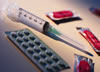 Information on contraception and contraceptives may be more difficult to obtain outside the U.S. or not available in your host country. You should inquire before you leave. If there is any chance you may be sexually active while in Japan we recommend you bring your own supply of comdoms and contraceptives. Condoms are the most common form of contraception in Japan, though the contraceptive pill can also now be prescribed.
Remember, if you are bringing in more than a one-month supply of prescription medication you will need to obtain a "Yakkan Shoumei" certificate. Please carefully review the US Embassy in Tokyo's website for more information.


